Act I / Prologue: The stage of the Paris Opera, 1905.
This is how the libretto for the Phantom of the Opera begins.
Before we first encounter Raoul or Christine, before we learn about the strange affair of The Phantom of the Opera, before the chandelier rises and the familiar music crashes in, there is one presence that’s already there: The Paris Opera House.
The theatre in which Phantom is set is such an intrinsic part of the show, that it’s almost a character in its own right – a character with plenty of stories to tell. How many of those stories we can uncover…
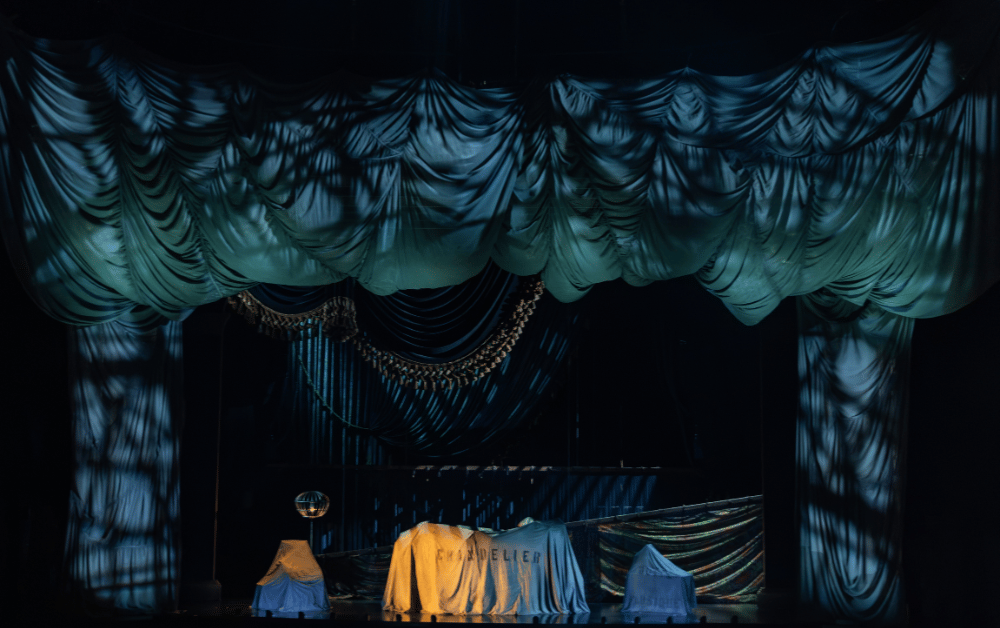
The Opéra Populaire
Of course, we must start with the main character herself: the Opéra Populaire, aka the Paris Opera House, aka Paris’s grand dame of theatrical entertainment.
The Phantom’s home is a real place: beautiful, opulent, and as spectacular as any of Paris’s iconic architectural designs. Today’s Paris Opera actually houses two buildings: the Palais Garnier, which opened in 1875, and the Bastille Opera, which was inaugurated in 1989. For the purposes of Phantom, though, the Opera House in question is undeniably based upon the Palais Garnier.
The Palais Garnier is gloriously sumptuous. Its lavishly decorated theatre was created by the architect Charles Garnier, who had only a few completed projects to his name before he won a competition to design and build the Palais Garnier in 1861. It took 14 years to complete and was the first in a series of iconic French buildings he completed, including the Casino de Monte Carlo and the Cercle de la Librairie.
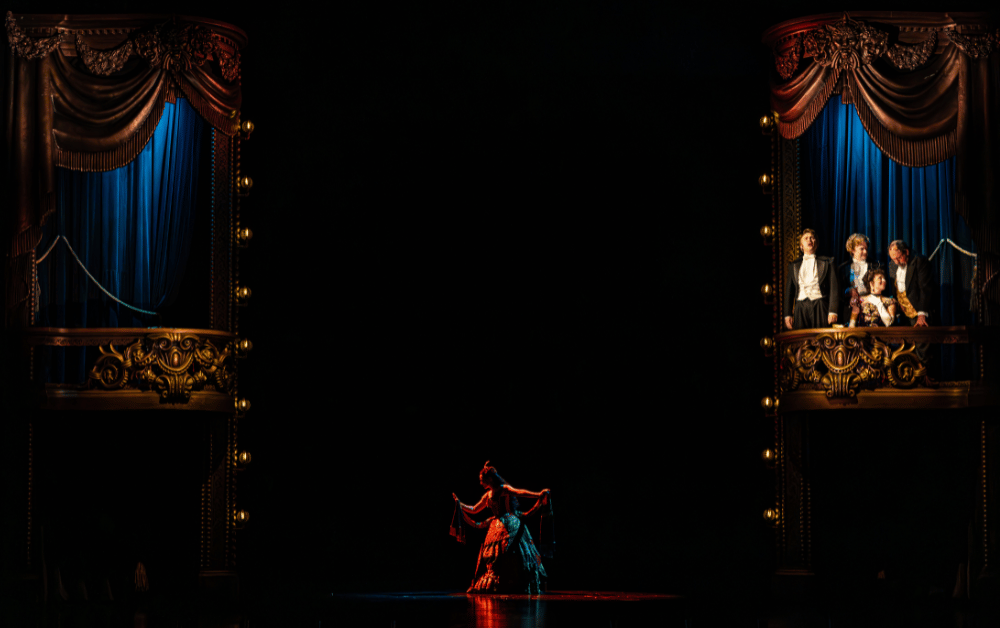
The auditorium is a riot of red and gold, full of sculptures, mosaics and – yes – a huge crystal chandelier. It has 2051 velvet-covered seats, many of which are located in boxes (yes, boxes), as well as sections in the orchestra, balcony, and amphitheater. We are unable to confirm what the view from Box Five is like, but if The Phantom of the Opera had ever set foot inside the Palais Garnier, we can only assume he would have approved.
.png)
The Lake
So that’s the theatre itself, but we all know most of the scenes in The Phantom of the Opera take place offstage. So, what else is the Palais Garnier hiding?
Regular Phantom fans may or may not be surprised to know one thing the opera house is hiding is a lake, of sorts. When The Phantom leads Christine down through the subterranean labyrinth that lies under his Opera House, it is based upon a real location beneath the Palais Garnier. Incorporated by Charles Garnier it seems highly likely that this body of water inspired the underground lake where original Phantom author Gaston Leroux located The Phantom’s hideout.
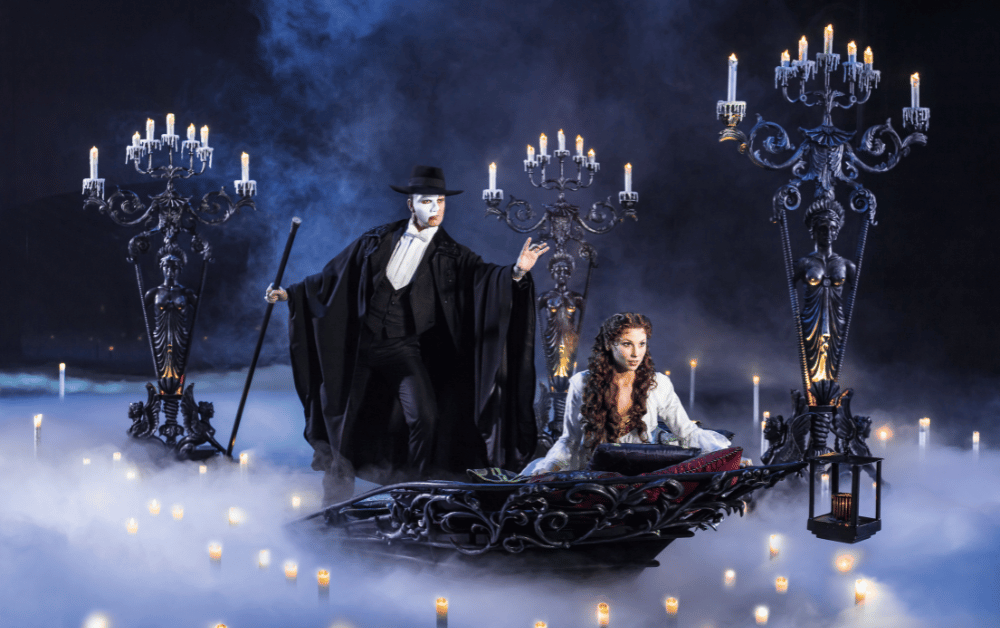
The Chandelier
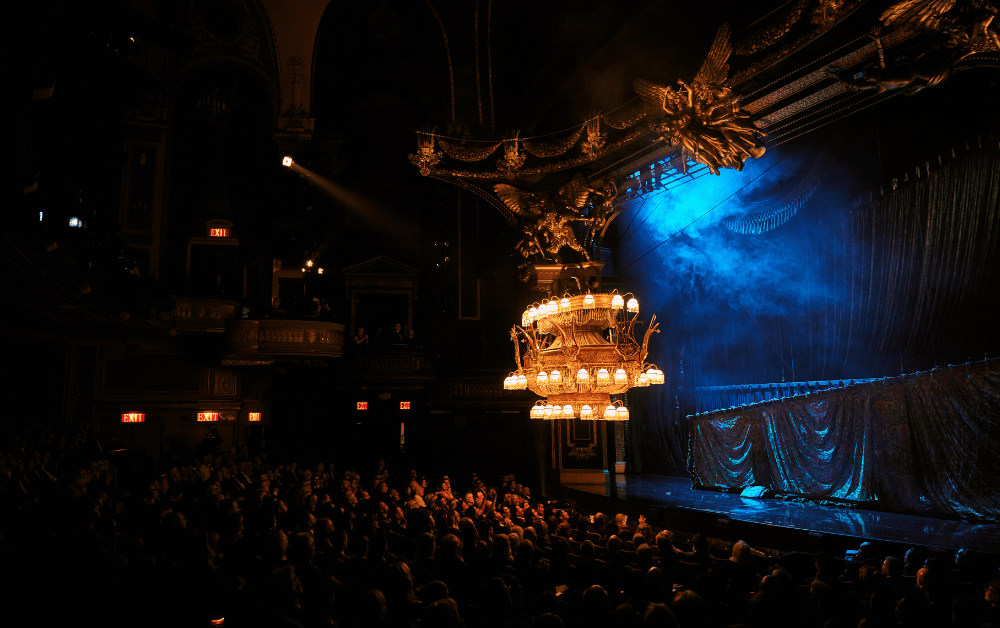
Let’s return for a moment to the crystal chandelier, which is inextricably linked to Phantom. Palais Garnier once too had a chandelier that crashed to the ground during a performance, much like the one in the show.
According to various newspaper reports, it occurred in May 1896, during a performance of the opera Helle. While some reports state that a chandelier fell in the gallery as the audience was watching the show, other sources suggest it was a counterweight holding up the chandelier that broke loose. In the show, it is the Phantom who causes the chandelier to crash; as Act 1 ends with Christine and Raoul declaring their love for each other, performing ‘All I Ask Of You’.
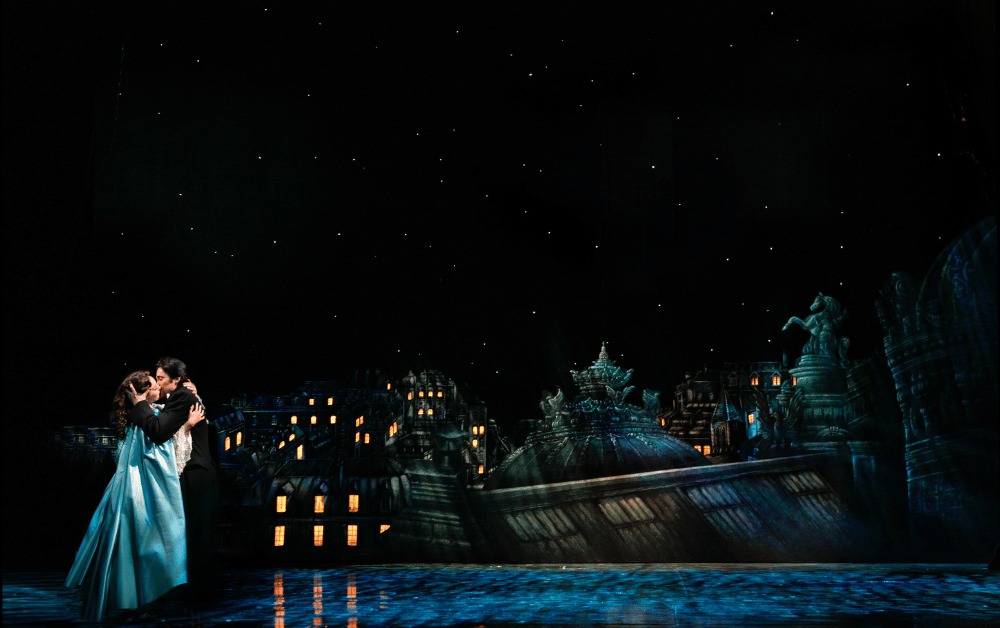
The Rooftop
The setting for ‘All I Ask Of You’ is romance itself, with the towering statues and dimly lit domed rooves of the Palais Garnier setting the scene far better than the velvet curtains and bright lights of the stage. And of course, that setting is even more beautiful in real life. The Palais Garnier’s own domed roof is a striking copper green, and it sits alongside golden statues and marble-white structures looking out on a Parisian skyline that has more drama than any theatre production.
The Theatre Boxes
But now back to the seating plan. The Phantom may have preferred to watch or hear the onstage action from his usual seat in Box Five, but the largest box in the Palais Garnier is called the Box of Honour, and it is normally reserved for visiting dignitaries, not Opera Ghosts.
In July 2023, however, the Box of Honour was the scene for a very special Phantom of the Opera experience, as Véronique Leroux – great-granddaughter of Gaston Leroux, creator of the Phantom – partnered with Paris Opera and Airbnb to invite one lucky set of Phantom fans to spend a single night at the Palais Garnier. The Box of Honour was transformed into a sumptuous bedroom complete with its own stage curtain. The stay included a tour of the entire opera house, including the underground lake.
Find out More

This was a Box Five Club Exclusive
Members of The Box Five Club had access to this story before anybody else.
By signing up, you’ll be among the first to receive exclusive content, special announcements, and behind-the-scenes updates, delivered straight to your inbox, as well as gaining access to the exclusive Box Five store. Join now and stay connected to all things Andrew Lloyd Webber!

Forty Years of Phantom: Andrew Lloyd Webber's Phantom of the Opera Celebrates Four Decades in the West End with a Special Performance on 9 October
Forty Years of Phantom: Andrew Lloyd Webber's Phantom of the Opera Celebrates Four Decades in the West End with a Special Performance on 9 October
Forty Years of Phantom: Andrew Lloyd Webber's Phantom of the Opera Celebrates Four Decades in the West End with a Special Performance on 9 October
Forty Years of Phantom: Andrew Lloyd Webber's Phantom of the Opera Celebrates Four Decades in the West End with a Special Performance on 9 October
.avif)
Andrew Lloyd Webber Announces Remixed and Remastered Original Phantom of the Opera Album as London Production Celebrates 40 Years
Andrew Lloyd Webber Announces Remixed and Remastered Original Phantom of the Opera Album as London Production Celebrates 40 Years
Andrew Lloyd Webber Announces Remixed and Remastered Original Phantom of the Opera Album as London Production Celebrates 40 Years
Andrew Lloyd Webber Announces Remixed and Remastered Original Phantom of the Opera Album as London Production Celebrates 40 Years
Erin A. Craig’s Our Strange Duet Debuts at Number 1 on the New York Times Bestseller List
Erin A. Craig’s Our Strange Duet Debuts at Number 1 on the New York Times Bestseller List
Erin A. Craig’s Our Strange Duet Debuts at Number 1 on the New York Times Bestseller List
Erin A. Craig’s Our Strange Duet Debuts at Number 1 on the New York Times Bestseller List
Our Strange Duet by Erin A. Craig Is Out Now
Our Strange Duet by Erin A. Craig Is Out Now
Our Strange Duet by Erin A. Craig Is Out Now
Our Strange Duet by Erin A. Craig Is Out Now
.jpg)
Evita: The Full Album Released Today | Available Digitally & on Triple LP Vinyl